
In August, chokecherry month, I travel to Eagle Butte with Delilah for the Indian rodeo. It’s a three-hour drive from Rapid City on Route 34 and we stop only once for a couple of forty-ounce malts at White Owl. The competition is part of the Indian National Rodeo Circuit and their big shows are in Las Vegas and Denver, but this one is local and when we arrive she tells me I would not be welcome there. Then she disappears for the day, no apologies, no explanation – just thanks for the ride. I sit in the car wondering how hurt I should feel, but let it go because, after all, I know who she is and saw it coming, or should have. I’ve no right to be surprised and barely any right to be annoyed.
I spend the day wandering the town photographing roving bands of kids who stare and sometimes spit in my direction while giving me the finger, but mostly they do what kids do which is to wreak a trail of destruction. I photograph rusting trailer homes, abandoned cars on blocks with windows curtained with towels, boarded storefronts; empty, packed-dirt playgrounds, a tiny pharmacy, a movie theater with a collapsed roof and moldy posters for One Flew Over the Cuckoo’s Nest and The Life and Times of Judge Roy Bean in the busted marquee windows. In the afternoon I nap the heat away in my back seat. When I wake I eat half a bag of potato chips and drink warm, flat beer for dinner.
At dusk I head to the rodeo grounds anyway and find Delilah was right. I get menacing looks, and one large man with a turquoise bolo the size of a large fist just points his finger at me while shaking his head. After this I throw away all my film from the day. I don’t need to look at the contact sheets, I already know I’m no Louis Hine, no Jacob Riis. I don’t have the heart or a passion for social justice. I am only interested in mysteries, only in things I can’t comprehend, and poverty and hatred are no puzzles. They’re just the quotidian bread and butter of reservation life. That night I sleep in my car and when Delilah does not show up by morning I leave, knowing she will not care, maybe not even remember who brought her.
On my drive back to the Hills I stop in Union Center for gas at the Sinclair and a hamburger at the Prairie Lunch Box next door. When I pull out onto 34 again I see Delilah standing on the edge of the highway near a farm implement store, thumb out like she’s expecting me. I stop and before she hops in she waves at someone inside the store who I can’t see. Then she drops the seat back and lets out a deep breath. She looks a bit worse for wear and exhausted, but tells me she needs to make a stop at Kyle before closing her eyes.
The route takes us through the south badlands, well off the beaten tourist trail. I pull the Impala over at Rockyford just before we cross the blanched and cadaverous White River which meanders and daydreams for over five hundred miles east until it joins the Missouri. Delilah rolls out, walks fifty feet to a wide sandbar, bends over and vomits. She rises, takes a few wobbly steps, then squats to pee. Then she stands straight and proceeds to the edge of the water, head high, regal, walking like a queen. I observe her closely, like many times before, and note the cheekbone scar, her nose bent slightly to the right, the deep gray eyes, chopped hair, chipped front tooth, gangly walk, crooked little fingers, and impossibly long neck. I recall her stutter when excited and the quick flashes of anger and understand all these not as flaws, but as lures, charms, ornaments.
I exit the Chevy too and approach the water when a strong gust, a pickpocket wind, blows her hair straight back, almost parallel to the ground. I’m sorry I didn’t have my camera ready. The blue ribbon in her hair comes loose, and the wind takes it over the shallow waters and into a dry, yellow ravine beyond. No move to retrieve it, just a wave goodbye as though this were the ribbon’s destiny. This I did capture. In the years to come, whenever I look at the photograph, I imagine the wave is for me.
When Delilah exits the Medicine Root Detention Center in Kyle her face has lost its softness. It’s chiseled, abstracted. Inside is her sister Grace’s husband, about to be released after beating his girlfriend unconscious. Delilah had a word with him. Outside, the Guardians of the Oglala Nation mill around near the door and confront her when she exits. I can’t hear the words. The GOONs point fingers and laugh in turn. She takes three steps toward them. Two men unconsciously step back, but one stands his ground. He is an oak, and she is a sapling. In another context, comical. He talks, smirks, points at the car, at me, then talks more as though he is unsure of what will happen when he stops. When he does, Delilah speaks a few words and he shrugs, walks away.
When we get to the edge of town she is shrieking, not about her violent brother-in-law, not at the thuggish Guardians, but at me. “Why are you here? What do you think you are doing? You should go to some other place! What do you want from me?” She cannot shut it down. Driving is an ordeal, unsafe, but I force myself to remain in the car. Eventually she exhausts herself and immediately falls asleep. I don’t know what is more frightening, the GOONs or her, but I agree, it’s unclear why I stay and I’m not sure what I am doing, but I dredge up some courage and decide not to run.
After driving back to the Hills, Delilah and I stop at the Silver Dollar in Hill City. We sit at the end of the bar and I order two red beers and sip mine slowly, while Delilah drinks only half before asking for a vodka tonic. We are tired and sit without speaking, emptying the peanut bowl twice as the bartender, a young man with long blond hair keeps an eye on us. I order two more drinks and pay up front to keep him happy.
The bar begins to fill up with young ranchers, lumbermen, and road workers with their wives and dates. The men are dressed in crisp western shirts and polished cowboy boots and I am reminded it is Saturday night. I am afraid we will become less and less welcome, but Delilah is stubborn and refuses to abandon her seat or her drinks. The jukebox plays “Good Woman Blues” by Mel Tillis and a drunk young man with creased jeans and a clean cowboy hat jumps on his table and begins to slow dance with himself. The room eggs him on and claps faster and faster until Cowboy Hat loses his balance and topples onto his date. The room laughs and the Hat jumps up and bows. Still on the floor, a woman screams, and through the crowd I can see the bone sticking out of her skin near the elbow.
Delilah doesn’t turn and I ask, “Did you see that?”
“Nothing to see,” she declares as she takes my hand and squeezes. She doesn’t let go and I have no idea what this means. We remain at the bar until closing time and I am out of money. We return to my car and she is both furious and cold, a combination of McMurphy and Ratched. Then she cries for no reason I can discern and, eyes closed, whispers, “Dream of me every once in a while will you?” She is asleep with her head on my lap and arms around my waist before I can tell her I already do. That night I dream of a drunk teetering on a high ledge. In the morning I can’t recall if it was Delilah or me. I can’t remember if we fell or not.
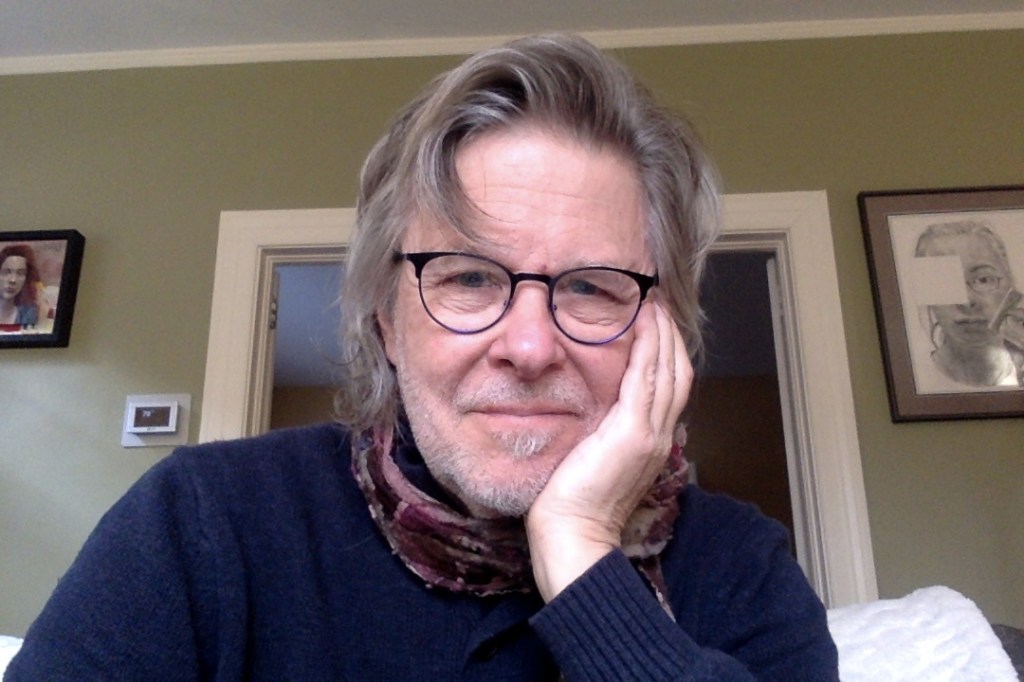
JWGoll is a writer working as a hospital Patient Advocate in North Carolina. His fiction is born of experiences as a photographer in Chicago, the Dakotas, and Central Europe. He has published work in The Vestal Review, Fiction Kitchen Berlin, Epiphany Journal, BODY, New World Writing, and Storm Cellar among others. He is included in 2024 Best Small Fictions for the flash fiction story, “Boilermaker,” published in The New Flash Fiction Review and nominated in 2025 for that anthology for “You Ain’t No Fuckin’ Warren”, published in Your Impossible Voice. Website: jwgoll.com Facebook: Jeffrey William Goll
 BarBar
Leave a Reply