

Shanghai’s Rain
As we left the hotel for dinner, it was raining fine like a newborn’s hair, typical for December in Shanghai. Dad pulled out a long umbrella and opened it to share with Mom, then passed me her tiny UV umbrella. It was eight in the evening, I could feel human touches everywhere, yet only a few lingered on the street. Eggshell yellows, ice blues, and lime greens striked on the shared bikes on the street; they were clean, quiet, and in their own practiced order. I stayed walking behind my parents as if I would be lost without their guidance.
A month ago, with the passing of the Great Aunt, I asked Dad to come with me on a trip to Kyoto. We had been living apart for thirteen years, only sharing snippets of conversation via WeChat. I felt that it was important for us to do this together. From the beginning, Dad was reluctant, even though Great Aunt was our last connection to Japan. He said he did not want to be surrounded by the people’s discrimination. “How are you still willing to show respect to them after they called you a “chi-na mud?” He questioned. I accepted his anger. He bought me a ticket to Kyoto a day after.
I flew solo from Toronto to Kyoto in the first week of December, I went alone to the funeral and asked my parents to pick me up in Shanghai three days later. After thirteen years lived elsewhere, I knew I would struggle without a local phone or WeChat. Perhaps, I also felt that this would put us on a fairer footing in some way. This time, it would not just be me travelling to reach them; they’d also be moving forward to reach me.
The night I landed in Shanghai, we made our way to a local restaurant that sat near a department store on a little street. My parents strode, always in a rush, chasing something in the air that no one else could see. They crossed the street, running toward traffic lights like the others around them. While I stopped and waited for the next green light. We looked at each other from opposite sides of the street. Mom was standing on the left, pulling at her dusty rose turtleneck. Her pearl necklace, the same colour as her brand-I-cannot-name handbag. Dad carried his weight on his right leg; more umbrella room for Mom. His clothes were not expensive, but chosen with attention to the cut and fit—the subtle combination of textures. He looked like Takeshi Kaneshiro in the Wong Kar-Wai movies from the 90s and 2000s. Both my parents looked dated and handsome as if they were shielded from aging. Dad passed the umbrella to Mom, took out the camera, adjusted the exposure, and fell back, taking a photo of me standing on the other side of the street. I smiled at the lens, my gaze shifting towards my reflection in a puddle on the ground, glad that I had hidden my gray hairs before this trip.
I crossed the street. “Why are you guys in a rush?” I asked.
“Why weren’t you in a hurry?” they replied. I shrugged, there was nothing worthy of my chasing. The buildings around us were dark, the trees flourished and quiet. Plants grew on the steep walls of colonial buildings, reminding me that this city was called The Paris of The East in the 1900s. Along the street, the restaurants and cafés had turned on low, dim lights—glowing like lanterns. Even though we were in the middle of the city, and my brain told me it was too dark, my gut told me I was safe. I was not alone, my parents were here with me. This was one of the experiences I liked most about China and Japan, and, like so many things, it was halfway between a cliché and the truth. “It’s beautiful and safe,” I said. Dad smiled, and Mom furrowed her eyebrows. It was impossible to tell if they agreed.
Train Rides
The next day at the Shanghai Hongqiao train station, Mom passed me my Resident Identity Card and told me that it would be my train ticket. I was too warm and confused to ask her any further questions. We passed the security check, I collected my bags and kept on following my parents. In time, we arrived at the right platform. There, a high-speed express train would bring us back to Beijing within five hours. My parents gave me the window seat, the city was gray and concrete, dull in the rain but not entirely unfamiliar. I recognized the form of everything–buildings, farmland, lakes, rivers, overpasses, train crossings; but in their own details, their own materials, they were all slightly different, and it was these not-too-small but significant changes that absorbed me. I couldn’t stop oohing and aahing at the speed of the train, watching as the buildings grew higher then lower and into homes with white walls and flat inky roofs. Dad brought out his camera again and asked whether I would like to take photos with it. He told me it was a new one, a Canon. It had three small dials, a glass viewfinder, and a short lens that he could turn with his finger to adjust the aperture. This camera reminded me of the first one he owned and used to take family photos when I was little. “Oh, that one,” he said, glancing at the ceiling, then turning to me. “I got it from a passenger on a train.”
Dad said that one early morning in the winter of 1986, three months after marrying Mom, he returned to work as a police officer onboard a train from Beijing to Guangzhou. He said it used to take four days to travel, but now it only takes seven hours. He told me that once, while the train was about to take off from a twenty-minute break, he noticed a lao wai, a middle-aged white guy, taking photos at the train platform without realizing the train was about to leave. Dad yelled some simple words to him in English, words he had learned from some American missionaries on the train. The white guy seemed to understand and ran to catch the train. Dad reached out his arms and pulled him onto the train three seconds before it accelerated.
That evening, the white guy walked through many carriages to find my dad and they sat down together for coffee. They communicated by pointing to words in an old Oxford English-Chinese dictionary. After saying “Xie Xie,” thank you, the middle-aged white guy “said” he came from Canada. Dad smiled as he pulled a piece of paper from his notebook and drew a doctor with a maple leaf, writing Dr. Norman Bethune, which was everything he knew about Canada. The white guy smiled back and continued communicating with the dictionary. He was an employee of the Canadian Pacific Railway, and it was his dream to come to China and see the trains and railways here. He pointed to several other words in the dictionary, “I, would, like to, express, my, gratitude.” He drew a long railway with many people lying on the railway tracks in my Dad’s notebook. “Chinese, man, build, railway.” He pointed in the dictionary.
I fell silent after hearing the story. I resented the fact that Dad’s first camera came from a white guy. Perhaps, it was the moment I learned about the Chinese Railway Workers, and felt a sense of hopelessness, I remembered how I was treated in Canada, how China was dehumanized in the Western news and media, and how so many were still blaming me, China, and the Chinese for the rise in Asian hate.
Mom, closer to the aisle, showed me a video of a kid I had never met playing with snow in a parking lot. “Beijing is cold enough for heavy snow.” She said. She revealed that the kid in the video was my young cousin, born the year I departed the country to study abroad. He was now thirteen. If time could embody a shape, I realized, it would be a child. Dad stood up to get hot water, I moved closer to Mom, holding her hand. Here I was, finally with her, the only person on the earth I found worth in trying to navigate our complex relationship. I looked at her as she stared out the window and said it was raining again. I followed her gaze, sure we were still around the South, but losing track of which city or province we were passing through. My thoughts wandered to Toronto, recalling how I hustled around the city from morning till long after dark, seeking a safe space, seeing everything but forcing myself not to take it all in. During the train ride, it felt as though I was a child again, mad and excitable, endlessly talking, laughing, and asking Mom for more and more snacks.
Summer Palace in Winter
Beijing, lay blanketed in snow. Dad teased that I had carried the cold with me back from Canada. I remained silent, mesmerized by the everlasting streets. I forgot the weight of history resting upon this ancient city and the reason why I loved it so much. Snow fell upon the roofs in silence as the dry wind swept past the city walls without a trace. The moon cast its glow upon the river, leaving no shadow in its wake. In the hushed tones of the city, everything felt inconsequential.
Dad suggested we visit Summer Palace one morning; said we should spend the whole day there for the “gold”. When we arrived, parts of Kunming Lake, the largest lake in the palace, were frozen over, providing a natural skating rink for visitors and locals. It was here, amidst this icy expanse, that I first heard the name of a country called Canada. One crisp afternoon in the winter of 1997, I received my first pair of ice skates. Eager to test them, Dad and I strolled to the Summer Palace for my inaugural skating lesson. Nippon-sei, “Made in Japan”, I declared in Japanese, reading aloud to Dad. He listened intently, tying my skates with care. “My first skating shoes were made in Canada, and I still wear them to this day,” he explained, pausing after each word. “Canada?” I echoed; curiosity piqued. “Where is Canada?”
“Far,” he replied, “somewhere far from here.” I found its pronunciation intriguing, notably easier for a Japanese speaker like me to articulate. It had fewer ‘r’ sounds compared to ‘American’ or ‘Britain’.
As we walked around Kunming Lake, I asked Dad about those skating shoes. He laughed and said he still had them somewhere at home. “Would you buy anything made in Canada now?” I questioned. Dad shrugged, “depends on what, but right now China could make anything–there is nothing you can imagine that we cannot make here.”
The sun shone dazzlingly, casting a myriad of reflections off the frozen lake. Willow trees, their limbs graceful and swaying with the gentle breeze, framed the scene with an ethereal beauty. Around us, the Summer Palace buzzed with life. It was thronged with visitors from around the globe, their voices a tapestry of languages that filled the air with a vibrant, yet somehow serene, energy. “I can’t believe there are so many foreign visitors here,” I said, my words puffing out in clouds of vapor. Dad looked at me, his brows furrowing, “what made you even have those thoughts?” Of my thirteen years in Canada, not once had I met anyone who’d even set foot in China, never taken the high-speed train, never experienced palm-reading payment; everything could put CN tower to shame. And yet, every province in Canada has a backdated-looking Chinatown to imprint the tale of a colonized image of China after the First and Second Opium Wars in the 1890s.
Dad pressed on, I jogged to keep up. When we arrived at the former Navy School of the Qing Government and examined the classrooms’ furniture, Dad questioned whether I remembered his visit to Calgary. I gave a quick nod. It was the second time Canada had entered my life. When I was nine, Dad embarked on a journey to Calgary alone to visit his Great Uncle. Dad landed at Calgary International Airport on a chilly evening in 1999. His mission was to meet a Great Uncle from his mother’s side, a man he had never known. This Great Uncle, nearing retirement, intended to entrust his furniture factory to my Dad, the sole surviving member of the younger generation in our family.
Great Uncle confided in Dad, saying he saw reflections of his siblings in him. “If not for the internment camps, my younger brother would have been alive,” he told Dad. Three of his siblings passed away in the camp, and when they left, his mother took her own life. Curious and somber, Dad inquired further about the camps, prompting his Great Uncle to share more of his experience.
The next day, over tea, the two of them, both distanced from their Japanese heritage by generations, found communication challenging. Neither were fluent in Japanese. Dad relied on the English he picked up working on the trains and shared photographs from his notebook. He was still haunted by thoughts of the internment camps. He told me he tried his best to speak of the complex legacy left by Japanese soldiers in China and the enduring trauma they inflicted. And yet, he also talked about resilience and adoption: “The Japanese soldiers left horrible trauma for every single Chinese. Yet, after being adopted by Chinese families, my parents, their kids, and our kids have all led good lives in China. Yes, we’ve endured famine and the Cultural Revolution. And yes, my daughter is struggling at school with bullies, but she is still who she is. She speaks Japanese even better than me. No, we aren’t wealthy, and we don’t own property like you do, but, we’re okay. We’re all alive. No one was sent to a camp.”
As the conversation unfolded, I could imagine how the tea grew cold, and how Dad carefully replaced the photos into his wallet, looking into his Great Uncle’s sorrowful eyes. “I don’t want my family to suffer. I want my daughter to grow up proud of her identity.” The next day, without further discussion of taking over the business, Dad returned to Beijing, his decision firm. Until this moment, I still think he made the best decision for himself, and us.
Time began to fleet when light danced and the world seemed to hold its breath. As we reached the Seventeen-Arc Bridge, Dad urged me to gaze upon it. Lifting my eyes, I was met with the sunlight piercing the arches, its rays colliding with the ice below to cast a radiant sheen of gold across the lake. I could very well believe this was the gold Marco Polo had extolled in his writings, the mesmerizing allure that beckoned colonizers to dream of China in the 1700s. It was as if the bridge and the lake had conspired to unveil a portal to an age of exploration and wonder, a scene so beautiful, it seemed lifted from the pages of the bamboo scroll itself, immortalized.
Golden Light
The next day, on a lazy afternoon, my parents and I gathered in a sun-drenched room. I tried to read a book while my parents were glued to their phones. I couldn’t stop thinking about that story in Calgary. I turned to my Dad, who was basking in the sun by the window, and asked, “What do you think our lives would have been like if we had moved to Calgary then?”
“How could I possibly know? I’ve never lived in Canada,” he said, peering at me over his reading glasses.
“What do you think it would have been like?” My Mom, lying next to me, lazily joined in the conversation, “I wouldn’t have moved with you, that much I’m sure of. I could never leave China.”
“Why not?” I asked.
“Haven’t I told you? Those doctors I know who left China for North America, none of them could continue working as doctors. They all ended up cleaning. After studying for so many years to become a surgical nurse, I wouldn’t sacrifice my career like that.”
“Alright,” I turned back to Dad, “so it would have been just you and me, without Mom, when I was nine, moving to Calgary.”
I leaned back; the warmth of the sun pulling me into some fantasy and weaved a what-if tale for my parents.
“I and my dad embarked on a grand adventure, planting their flags (and furniture) in Calgary, somewhere snuggled up close to the Japanese Canadian Association Center, but not so close that they’d be mistaken for the furniture display. My dad, inheriting the family’s furniture empire (a quaint workshop that smelled perpetually of cedar and sawdust), decided it was time for a new beginning.
Our first Canadian quest?
Conquering the English language at the ESL center, where both father and daughter realized that “tree” wasn’t just something you saw in a park but also sounded like the number after two.
Fast forward a few months, and I, your protagonist, aced my English exam with the flair of someone who’d just discovered the power of sarcasm, landing myself in grade one. Picture this: a nine-year-old with the wisdom of the ages, seated among first graders. On the very first day, my lunchbox became the center of attention—not for its culinary excellence but for the seaweed that seemed to whisper tales of the ocean. When laughter erupted, I, in a display of culinary defiance, decided to offer a direct tasting session by stuffing rice and seaweed into the chief mocker’s mouth.
The result? A call to my dad and a scene that would make any wildlife documentary proud: I, tears streaming, defending my honour, and yes, engaging in a bit of arm-nibbling with the teachers. The school’s verdict was that I was “too dramatic,” a label Cordelia wore like a badge of honour, dreaming of the day I could channel all that drama into the noble art of theatre.
Fast-forward through a montage of growing pains, laughter, and an enviable collection of seaweed recipes, I did indeed join the theatre club, trading in arm bites for accolades. And in a twist that no one saw coming (except for maybe myself), I skyrocketed into fame, clinching an Oscar at 35, thus becoming the first Chinese actress to do so.
The moral of the story?
Never underestimate the motivational power of seaweed in a lunchbox.”
Neither of my parents laughed, but both let out a soft sigh. Dad, in a moment that felt heavier than usual, took off his glasses. He looked at me, a silent invitation to open up about my time in Canada. For a moment, I hesitated, weighed down by the complexity of translating a life lived in the intersectionality of cultures into words they might grasp. My parents, bless them, have never judged anyone by the colour of their skin, focusing instead on cultural background. But they speak no English and have never strayed far from the cultural environment they were born into. How could I convey the depth of my experiences in Canada to them?
The same way, I wonder how much future readers might grasp while reading this piece, without having set foot in China themselves.
The challenge wasn’t just about sharing experiences; it was about conveying the depth of them in a way that transcended language itself. My parents have never had to pause before crossing a street, wondering if a stranger’s eyes would follow them like a warning. They’ve never had someone curl their lip at the way they pronounce a word, or mimic their voice like it was a joke. They don’t know what it feels like to walk into a store and feel every gaze sharpen, or to sit on a bus and hear someone hiss, “Go back to where you came from.” It was about the inherent difficulty in truly understanding another’s journey without walking in their shoes, without the intimacy of the local water and land. I was relieved to be the sole bearer of these trials among the three of us. If it were my parents who suffered as I had in Canada, it would not be like a mere flicker of discomfort like arm bites but a raging inferno bursting from my chest, capable of reducing everything in its path to ashes.
I turned to face Dad, noticing for the first time the sunlight that framed him. It was a golden cascade, warm and inviting, stretching across the room to where I sat. I felt this warmth in my body, too, as the light touched my feet, then extended to Mom next to me, a tangible manifestation of being alive.
The sunlight touched my face, like steam from a rice cooker, fanning my cheek. I leaned the toe of my sock against Mom’s heel. That little touch reminded I was not just an Asian, not a monkey, not an ESL, not disposable. I was a person, a being with a name, a daughter, someone who had a brain, full of personality.
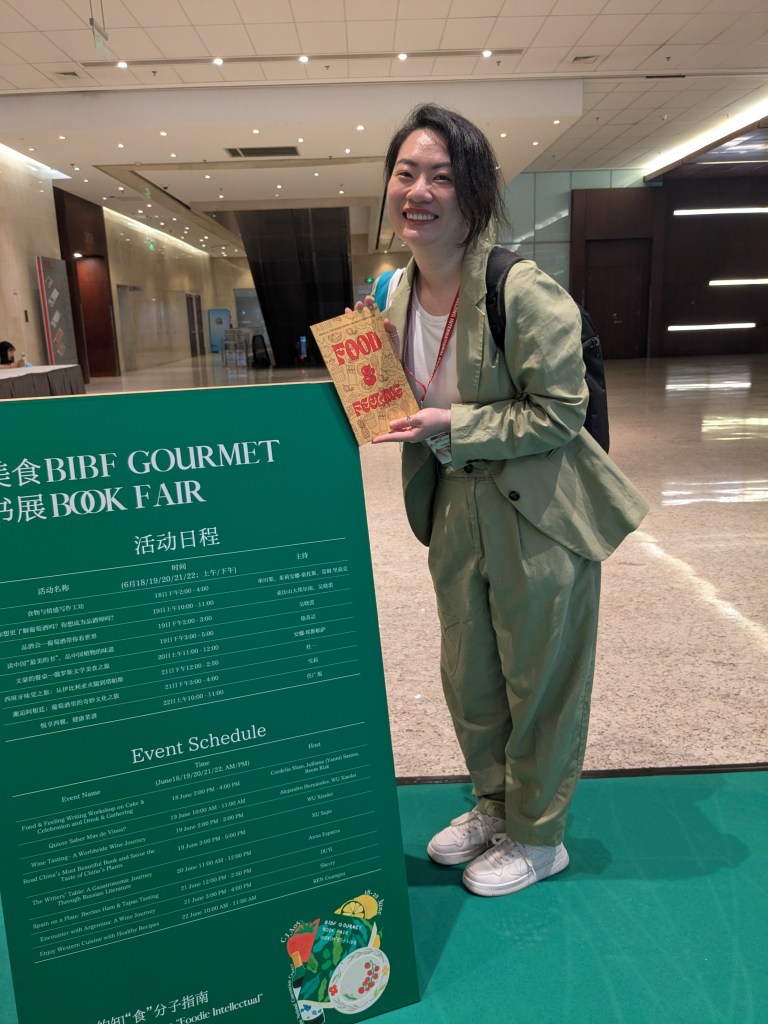
Cordelia Shan Qing Ru is a writer and translator who writes about life in Toronto, though she only recently realized how often Vancouver and Beijing appears in her stories.
 BarBar
Leave a Reply