

Jane was drifting along, alone in the boat and alone in her thoughts. It was sturdy, dark, and wooden. A boat. She knew this. She was drifting down a lazy river, occasionally sticking her hand into the clear waters. They were the clearest she had ever seen, so clear she could see the bottom of the river littered with rocks and reflections. Hers looked back up and reminded her that, no, she was not drifting along, alone in the boat and alone in her thoughts.
The man looked over at Jane and smiled. The sunlight peeked out from behind his head and warmed Jane’s face, before disappearing again behind a tall, lush tree. It gave the water a copper appearance, and somehow made the lazy river seem even lazier. The man was waiting, so Jane smiled back at him but saw that the water was becoming violent, rushing, waves crashing and threatening the boat. Things become violent. She knew this. The lazy river––no––the thrashing currents were causing the water to flood in. They were going to sink.
The man steered the boat away from approaching rocks and managed to dock it downriver. He tied it up, untied Jane, and started unloading. He needed to find the thing that was weighing them down. With each item the man lifted out of the boat, it became visibly lighter, bobbing back up to the smooth surface. He commanded Jane to count aloud:
- Two paddles.
- One pair of socks, waterlogged.
- An arquebus, waterlogged.
- A tin can, containing a whistle, a mirror, and matches.
- One compass.
- Two pots of wine.
- A blanket, about Jane’s arm span in length and width. It was heavy and durable.
- An overflowing basket of beans.
- A pile of furs.
- Rope.
- A bug jar, to trap the pests attempting to deliver Jane a message.
Having both a blanket and furs seemed excessive to the man. The furs alone would both protect them from the cold and deliver on the promise of riches. He placed the folded blanket aside and it quickly sunk halfway into the mud bank. Jane watched as the colors blended into the earth, wondering if the weight of a blanket was greater than hers and a season’s worth of dried beans.
The man looked back at Jane and she was squatted down, holding a shiny, red rock. She dragged it over her goose-bumped toes and then around her feet and around the blanket. She carved her way through the mud, tracing her existence. The man told her to get up and count it all out again. It was important that she at least be able to count to ten, he said. Now they had:
- Paddles.
- Socks.
- An arquebus.
- Signaling devices.
- One compass.
- Wine.
- Furs.
- Rope.
- The bug jar.
- Beans.
Jane successfully counted to ten, the words meaning nothing in her mind, but the man looked satisfied. They tucked the remaining supplies underneath their seats, and as the river settled down and the sun hung low, she heard her home burning and dissolving into the clouds. The fire would soon bring rain. She knew this.
The man stripped down to his bare skin, ready to enjoy himself. Jane’s dress had been the first thing cast aside with the rest of the unneeded bulk. She walked into the water with him.
“Always remember, Jane, these things—they’re all mine.” He spoke with a wide mouth and a pointed tongue. “You don’t need anything else now. Nothing else exists to you. Just me and my belongings, including you, Jane.” He pointed his finger in Jane’s face.
Jane did not back away from the man’s finger. She held it to the center of her chest and said, “Juana.”
#
Juana was not sure where she was travelling or how she had made it this far; she did not know where the river would lead, if not to her home. But Patuca always led home. She knew this. She knew many things, much more than the man.
She was drifting along, alone in the boat and alone in her thoughts. It was sturdy, dark, and wooden. She occasionally stuck her hand into the clear waters. It was clearer than she had ever seen, so clear she could see the bottom of the river littered with rocks and reflections, stockings and coats, fingers and toes. She rested her palm on the surface and closed her eyes, asking for guidance. Patuca answered and Juana counted as she lowered every stolen item into the water:
- Wood.
- Wool.
- Weapon.
- Tin.
- Compass.
- Pots.
- Furs.
- Rope.
- Fireflies.
- Food.
- A metal box containing a small, dented hatchet.
- Woman.
Juana floated on her back and watched the distant smoke plume into shapes and smiling faces. A jaguar walked along the bank, bobbing its head up and down in time. The wind slanted raindrops through the air. She was not alone. She reached down and found more shiny, red rocks to place on top of her knees and complete the scene. The water rose up to her chin, over her nose, covering her eyelids. The jaguar lay down and Juana set with the sun.
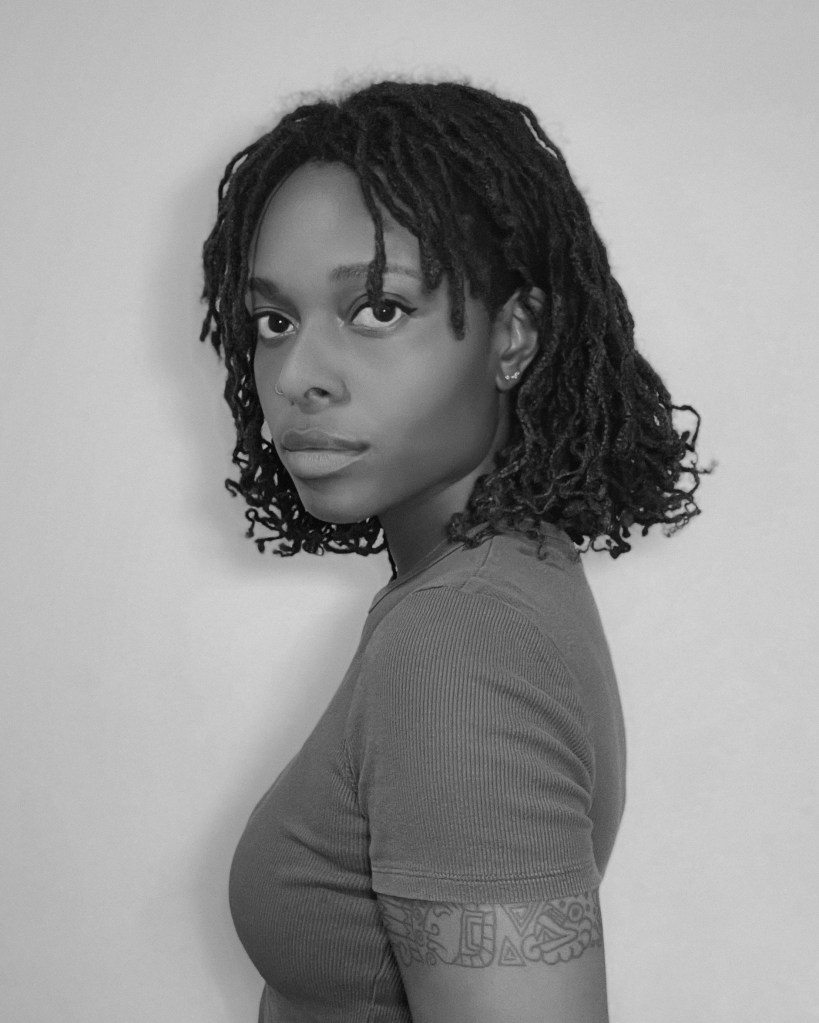
Born in New York City and raised in the backwoods of New Jersey, Caridad Cole is a second-
generation writer and filmmaker exploring family bonds, self-mythology, bodily autonomy, and
monsters. Her writing has recently appeared in Twin Bird Review, Coffin Bell Journal, and An
Anthology of Rural Stories by Writers of Color 2024 (EastOver Press). Her short story
“Happybot” was a 2025 Pushcart Prize nominee, her autobiographical piece “For Sale” was a
2025 BarBe Awards finalist, and she was the 2018 recipient of three grants from Words for
Charity for her short stories “Empty Houses” and “In a Town Called Albatross”. Caridad lives
and works in Los Angeles, where she founded the speculative literary and art
magazine, Moonday Mag.
 BarBar
Leave a Reply