
I always saw myself as a rational person. I have always laughed at any kind of magical thinking: astrology, superstitions… religions. Those were all forms of insanity to me. All beliefs in higher powers were – supernatural forces that could dramatically change one’s life; powers that cannot be seen. Then, one Tuesday afternoon in March, a phone call changed my so-called reasoning. I didn’t normally answer private numbers, but there was something about this caller’s insistence that I could not avoid. It kept interrupting Maria Bethania’s voice, who was telling me that “to make a samba with beauty, a lot of sadness is needed”. Samba da bênção, “blessed samba”, the song was called. It was easier to just answer the phone.
The call kept breaking and I missed a lot of what was said, which only made me more nervous; my palms began sweating. Someone had been in an incident and they had my details. He was speaking so fast, Garda Derek, in such a thick accent.
“Can you please come to the station?”, he asked.
I jumped in front of a taxi, not giving the driver a chance to refuse me. My half-waxed leg glued to the trousers I put on hastily. Which one of my students could it be? I imagined myself having to ring someone’s parents to inform them that something horrible had happened to their child – what a hard phone call that’d be. Reason isn’t comforting, you find that out when you’re desperate. Then magical thinking takes over like the scent of freshly baked cake, just out of the oven; warm, safe. I found myself repeating “God, please let this girl be safe” aloud over and over again, like a crazy person.
A lot of my students are Brazilian and because I am their teacher and am fluent in both languages they tend to ask me for help quite often. It can be overwhelming but I just can’t deny them. I remember when I first moved over. How different everything felt, how daunting it was having to express my needs in a different language… in a different way of being. How embarrassing it felt to be seen as less, treated as less when I struggled to communicate. So, I try to help them out as much as I can. I have been asked a few times to be a student’s contact in case of emergency, but never got a phone call in all these years.
I always hoped I wouldn’t.
When I explained to the taxi driver what brought me to the Guard station, he said “God, I hope they didn’t commit a crime. Imagine that?” I realised then that there was a whole spectrum of possible scenarios. There is something about a police officer saying ‘incident’ that immediately made me think one of my students was sexually assaulted. It was strangely calming to think that perhaps a student had robbed someone or been in a fight or something. It just seems that when anything monstrous happens to a woman, it is an ‘incident’, never an atrocity, a crime. A woman’s life too easy a sacrifice society offers itself. Routinely. I thanked the driver and tipped him.
The man who brought me into the small room on the left side of the building (past the main entrance of the station) couldn’t hold my eye contact. The room was bare apart from a rectangular table and four chairs, two on each length of it, facing each other. It looked like an interrogation room, except there was no fake mirror like in the movies. Garda Derek, dressed in a blue uniform, sat awkwardly in front of me. When he paused to look at the ground before speaking– all the while tapping his pen on the table– I knew it was going to be very, very bad. I could feel it in my stomach, which seemed to be pulling my throat down, attempting to consume it, to consume me. Garda Derek eventually suspended his tapping. Then, not knowing what to do with his hands, used them to brush his golden wavy hair behind his ears.
“Say something!” I wanted to scream. Heart palpitations vibrated across my body. My stomach devoured me with unanswered questions. Yet, after a sharp inhale, I continued to be mute.
Nothing could have prepared me for what he was about to say.
Erin? How could anything have happened to Erin? My Erin? She was only driving back from Donegal today, after a short holiday with her family. We spoke this morning. This morning! How could Erin have been killed?
“It’s not true, it isn’t!”, I shouted at the Guard.
“Why the fuck are you saying this to me?”
I ran out of there crying and rang Erin’s mobile. I rang it so many times, her voice-mail message will forever be recorded in my mind – like a worn-out song. I was crying and screaming outside the station, kicking the wheel of a car when a different Guard came out. She grabbed my arm and asked me to calm down. She patted me on the back and said softly “Sorry, love. I’m so sorry”. She asked me for Erin’s family details. They couldn’t find her driver’s licence or any other form of identification. I was only contacted first because it was my car Erin was driving, my car Erin had been killed in. I wasn’t allowed to see her. I wasn’t family.
Except I was.
I met Erin at the pub. I used to go to Whelan’s every Sunday night to hear folk music over a pint of Guinness. It was never too crowded on a Sunday there and you had the space to take the music in. She sat beside me and we started chatting. She asked me about my favourite bands, my favourite pubs… that kind of thing. She never asked my age or where I was from. She remarked on my dark caramel skin without calling it exotic. She touched the braid falling on my face and put it behind my ear, not because she wanted to feel what my hair was like, but because she wanted to look into my eyes. She took me in as a whole somehow and I felt seen for the first time.
I fell in love with her.
We lived a simple life. We went to work in the morning, we ran together before dinner, we went to Whelan’s on Sundays and walked back home to Smithfield devouring a kebab each. Her family didn’t know about us being together. To them, we were just flatmates. My family didn’t know about her either. But we had made our peace with it. Myself more so than she. I am not that close to my family so it didn’t hurt me. But it did hurt her. Not being honest about herself – for fear of not being accepted – was a sacrifice she felt she had to do for her family. I was fulfilled to have been accepted by her. Which is why I couldn’t accept that she was gone. Not like that. Not in such a horrific way.
I couldn’t move anything that belonged to Erin. Her clothes, her shoes, her books, her laptop. Everything was exactly as she left it. The first thing I did in the morning was to search for her in bed beside me. My hand felt her pillow – searching for her curly red hair. My hand felt the space beside me – trying to find her under the blanket… Nothing. All I wanted was to roll over her, suck her breasts, pretend to count her freckles as I kissed her voluptuous body.
I couldn’t accept the hole she had left in my life, the size of the emptiness that swallowed me. The sadness. The never-ending grief that hang itself over me every waking hour. I’d get out of bed and smell her dressing gown hanging behind our door. I’d caress her things… I’d search for her in every room, calling her name softly as I walked in circles through our small flat. “Erin, Erin”. There’d be a noise and I’d turn around:
“Erin?”
I didn’t intend to, but I found myself praying. I found myself praying for her to come back. It was impossible. But maybe it wasn’t. Maybe I just didn’t have faith. Maybe, if I offered God everything I had, if I gave a big-enough sacrifice, he would grant me this one wish. So I tried. I even found myself going to church – which I hadn’t done since childhood. But, then, I realised: God isn’t going to help me. He doesn’t want to. He is choosing not to. So, I started praying to find someone who could help me; someone who would.
Time passed without my noticing; life didn’t seem worth living without Erin. I had to work because I had to keep paying rent. My biggest fear became losing that flat – the home we had built together. I just couldn’t lose all our memories. Every second of my time-off was spent in the flat, picturing Erin walking around. Erin sitting on the couch watching TV. Erin getting out of the shower leaving a trail of water behind her – marking her path.
I was lost in my reoccurring Erin day-dream when the phone rang.
The second phone call that propelled me towards magical thinking came just as randomly. However, by then, I knew immediately that it was a sign. A kind of passageway towards heaven. Somewhere, somehow, my prayers were being heard. Some mysterious being was going to help me get Erin back. I knew it when I heard my mother’s voice on the other side of the phone telling me Auntie Marta had died.
“I’ll fly in tonight for the funeral”, I said, remembering the plan.
“You haven’t been home in over a decade!” my mother said, shocked. She remarked that I hadn’t been home when my cousin Natalia died; that I hadn’t been home when they thought my father was dying because the cancer treatment didn’t seem to be working. Sure, I hadn’t even considered visiting my own mother when she had Zika and didn’t know if she was going to make it. “There is no need for you to come to the funeral” she said. But I knew she spoke out of jealousy.
“I’ll be there tomorrow”, was all I said before hanging up.
I made a promise to Auntie Marta which I never told anyone. Sure, I was still a child. They all thought Auntie Marta had gone insane, but she was my favourite auntie. It wasn’t until my mother told me she passed that the promise came back to me in a flash.
And, then, I understood her more than ever.
I’d been to Brazil a couple years back, but it had been twelve years since I stepped in my old neighbourhood, Penha, in Rio de Janeiro. The last time I was in Brazil I didn’t tell my family. I stayed at a friend’s apartment in Ipanema and we just went to the beach every day. At night, we went dancing and drinking. It was fun experiencing life in Rio like that, like a rich person in a soap opera. Or like a tourist.
Which is what I feel like now, after having lived in Dublin for so long… A tourist in my old neighbourhood.
Being back in the streets from my childhood felt entirely different from the last time I was in Brazil. Nothing about the dusty, litter-filled streets made me feel like I was on a holiday. Every bus stop was filled with sweaty, tired-looking people. The men driving the VW vans that illegally transport you from place to place in the suburbs, stop to bellow their destinations – even though a hand-written sign on the front window informs you of it. It took me a minute to remember… not everyone can read and write in Brazil. Not everyone has a chance to go to school, to keep up with education. Not in a country where it costs so much just to eat every day.
The house I grew up in was built at the end of a long road. Past it, there were three more houses, which were bigger but divided into small flats. Right after the last house, a wall. The wall marked the end of the asphalted road and the beginning of the community. Beyond the wall emerged many narrow streets supporting tiny houses on top of each other. Most were residential but there were also bars, grocery shops, restaurants, etc, in the community beyond our home. The hood stretched up the entire height of the mountain; a whole city, right underneath the sky.
I had only been beyond the wall twice. Once, as a child, to visit a friend who attended the same public school as me. I lied to my father and told him I had to stay longer at school, to finish a project. Instead, I walked with my friend to her house, not only because I felt bad about refusing her invitation too many times (I was forbidden to cross the wall) but because I was curious about the whole other world that was right beside me and yet seemed very far away.
The second time I crossed that wall I was a teenager. The hood had changed a lot and become much more dangerous. The gang that ran the drug trafficking there had become exceptionally wealthy. It inspired greater envy in the enemy gang which meant more attacks from them. The whole thing attracted more police ‘intervention’, which was brutal in force. “Too brutal”, Auntie Marta used to say. “Too many bullets flying around, too many bullets getting lost in the screaming bodies of innocent people”. All the innocent, hard-working people that lived there. “Good Christians, too”, she would add. It just wasn’t fair. But, I was a teenager and filled with the arrogance of one. I didn’t flinch when I walked into the hood to buy drugs; not initially – not until I got to the small patio outside the brick house. The place was surrounded by boys either my age or just about older than me. Boys holding AK-47s as comfortably as I carried bread back home from the bakery. Boys who not only had killed before, but who constantly consumed drugs to be able to deal with it.
The moment I got close to them I knew anything could have happened to me. I immediately lost all of my teenage arrogance. I just wanted to run. But that felt more dangerous. They were flirting with me, they were messing with me and all I could think about was their guns. I remember thinking that I would rather be killed than raped. I cried all the way back home, the bags of weed and coke in my back pocket not worth the praise I was going to get from my friends at the party. I promised myself I’d never willingly interact with drug dealers after that.
As I walked towards the wall a third time, in preparation for Auntie Marta’s funeral, all I could think about was that day. That promise I made myself. But there wasn’t another option. I didn’t know how else to get a gun. I took a deep breath and conjured Erin beside me, to give me strength. My only chance was beyond the wall. I trenched towards the brick house where they sold drugs. The small, innocent-looking house the colour of clay.
I kept touching my left pocket to make sure the cash was still there. I attempted to steady my gaze, so as not to call too much attention to myself. I wore baggy, simple clothes but, sure, they can tell a stranger’s face when they see one. They registered I was a foreigner from the other side of the wall. I smiled to every woman I saw and avoided the eyes of every man – a ritual, whenever in Brazil.
One has to know one’s allies and one’s enemies.
“What kind of gun do you want?” An armed boy asked me. He chuckled and shouted at another teenager who stood at the back of the place. “This one is tough. Ah, ah! She is going to make trouble! Bring the guns, will you?” he ordered. The boy who approached me measured my body with his eyes and said “Are you sure you don’t want us to do it? We can kill him for you, you know? Might be easier, princess”. I told them “All I need is a gun, thanks”. The teenage boy put his arm around me and stroked my face. “Did he hurt you? We’ll get rid of him for a discounted price if he hurt you, you know? It’s not ok to do that stuff to a woman”. It was the strangest place to be offered any kind of protection. The young criminals sold me an old handgun for one thousand Reais. About two hundred Euros.
I had already purchased a pocket knife and a machete at the outdoor shop. I added the handgun to the rough linen bag along with the blades. I folded it a couple of times before putting it in my bag. Auntie Marta’s funeral was going to start in a few hours. Brazilian funerals happen within the first two days of death. In a poor country nobody has that much time to mourn – or funds to keep a corpse refrigerated. And unless the death is particularly suspicious and the focus of a police investigation, the cause of death seems to be determined fast. Within a couple of hours in some cases. Auntie Marta’s was a heart attack that took her life while she worked the sewing machine. She was in her late sixties and still worked most days. Work being the only thing that kept her mind and heart quiet. Work being the only thing that kept her from crying and talking about Tales still.
We were children when my cousin Tales was killed. Back then it was common for children to play in the streets, to use the street as their football pitch, volley-ball pitch, race-course, etc. Only a couple of people in the street still had gardens. Most people used the space to build a second, smaller house for struggling family members. Sometimes instead of building, they rented the space for a neighbour to park their car or have a workshop. And the few people who did have the free space used it for more practical things, like drying laundry. So, all the children played outside. When they saw a car coming, they just moved away. They all knew the ritual by heart.
All it took was one speeding car. After hitting Tales, the driver didn’t stop. It was all everyone could talk about at his funeral. How the driver could have saved Tales’ life, if only he had stopped and taken him to hospital. The police never found his killer. I don’t think they even looked into the matter. Auntie Marta said the officers barely acknowledged her at the station. They told her “These things happen to children who are roaming the streets unattended”.
People thought it was the police who did it. They were the ones who frequently drove unmarked cars and who thought people living in our kind of area weren’t worth saving. On the other side of the wall, the people from the community didn’t think we were one of them because we lived on the asphalt. But, to everyone living in the nicer parts of the city and to the police, the community was referred to as a slum. People who lived close to the slum and the people who lived there were one and the same: Criminals. Criminals by act or affiliation. Criminals by proximity. All of us. Too poor to matter.
Auntie Marta was my favourite person. She moved to one of the apartments up the road from us – the one just before the wall – when she became a single mother. And even though her life was so much harder than that of her sisters, in so many ways, somehow, she was the sweetest. When she wasn’t looking after Tales, she was working. I remember my mother talking about how she barely got any sleep, how she sacrificed herself all those years working every single day.
My mother judged her for leaving her husband. They all did. It didn’t matter to them that Auntie Marta’s husband hit her. “It isn’t all the time. It’s rarely”, her sisters would say. “And it’s not like he beats you. He just pushes or slaps you here and there because he cannot control his anger”, they would add. “Have you considered that if you leave him, he will remarry and spend all his money on another woman, on other children? And your son will be left with nothing? Nothing?” But Auntie Marta was adamant. She was going to leave her husband. And she needed her sisters. They reluctantly agreed. Auntie Silvia added that she might not be able to help much, but that she would try. She didn’t.
I wasn’t supposed to know any of that, of course. But I liked eavesdropping as a child and I was very good at it. I knew that when the sisters met, they would gather in the kitchen for hours, drinking coffee and talking. I would tell them I was going to play in the street but, instead, I sat outside underneath the kitchen window. I sat there and listed to their adulthood tales. At a very young age I learned that husbands hit wives, sometimes beat them. I learned that Auntie Marta should have accepted it because at least Tales would have a better life, in a better house and auntie wouldn’t have to work so much for so little. But I agreed with auntie Marta. I loved her, I couldn’t believe Uncle Paulo hit her. I knew that adults could hit children but I didn’t know they were allowed to hit one another.
As a child I thought Uncle Paulo was ever so nice, always saying how pretty I was, always asking if I wanted to go on a car-ride with him. He’d drive fast and break abruptly, using his arm to push my chest against the seat, to make sure I was safe, laughing at his own prank. He was always offering me some change to sit on his lap, giving me tight hugs. I was a teenager when I realised what he was. I was an adult when I realised there was a reason why neither myself nor any of my female cousins were allowed to have sleep-overs at their house. Ever. And the reason had to be that everyone knew. Everyone knew what a monster he was. I was a woman when I understood the scale of how unfortunate Auntie Marta’s whole life was. How disastrous. Auntie Marta’s own sisters, my own aunties, my mother, my blood… they urged her not to leave him. And they knew. They knew everything.
I spent a few days at her flat after Tales’ funeral. She had asked my mother if I could stay over as she couldn’t bear to see Tales’ empty bed. To have the whole place so dead silent. She tried to tell me a story every night as she had done to Tales. Never from a book, always from memory or imagination (books being an expensive luxury). But she could never finish a tale. She always started crying in the part of the story where the main character is striving to get what they want. She’d start to cry and curse God for what he had done to her son.
“How could I have trusted God when he did the same to his own son?” She would unravel. But I never knew the answer, so I would just shrug and hug her. “Will any sacrifice ever be big enough to appease God’s hunger?”
People were shocked at her cursing at God during the funeral. My mother had arranged the whole service: the reverend, the funeral house, the cemetery plot. Auntie Marta was incapable, she said. “She can barely go through the motions”, my mother would inform all callers enquiring about auntie. My mother was doing her best for her sister, she’d add. And when Auntie Marta tried to attack the reverend at the funeral, calling him a liar, accusing him of working for a killer of innocent children, my mother took her by the arm, away from everyone. But even though her words were mild and consoling, even though her hand was stroking the perfectly braided corn-rolls on Auntie’s head… I could see the scolding look on my mother’s face once they were away from the crowd. And I could see the reprimanding faces of the people at the funeral, the shaking of heads.
“She is possessed”, I heard a woman say. I was so angry I told her to shut up. When her hand hit my face as hard as it did, leaving a burning feeling behind it, I looked around for someone who would protect me. Yet, no faces sided with me.
“Have some respect for your elders”, a woman I had seen in church said. I simply walked away and stood by Auntie Marta, holding her hand. She just stood there, still. She cried through the whole sermon.
But when they lowered the coffin and started throwing earth on it, she let go of my hand suddenly. Words were once again leaving Auntie Marta’s mouth in screaming, angry laments. She was racing towards the hole in the ground when two men seized her. She fell on her knees and looked up at the sky screaming from the top of her lungs “I am going to kill you, God. I am going to fucking kill you, God!”. Her hands curled in fists, ready to fight. People started walking away then. Only the family stayed. My mother tried to convince Auntie to go back to church after, to ask the reverend for forgiveness. But she never did. She never changed her mind about God. She never forgave. I admired her for it. And I decided never to believe in a powerful God-man-thing sitting on a cloud in the sky not doing anything useful for anyone – just like ordinary men.
In those few days that I stayed over at Auntie’s we talked about a lot of things. Auntie told me about her plans for herself and Tales, how he was going to be the first person in the family to finish college. How Auntie was going to help Tales achieve whatever dreams he had. Auntie told me how Tales was going to look after her after he graduated, how he’d help make her life easier. She told me how furious she was at God, how much time she had spent praying, going to church, giving them ten percent of her earnings – which was a lot for her. Especially given that Tales’ father never once paid child support.
When I asked her if she was really going to kill God, she looked at me in the eye and said “Yes!” with a conviction I had only seen in people on television. Then she asked me to promise to help. She told me the plan. I promised. She was the strongest person I knew, Auntie Marta. Even though she lost so much weight after Tales, even though she barely spoke anymore, even though I never saw her smile again. Still, she was the strongest person I knew. She left her husband; she fended for herself; she threatened the most powerful being in the universe: God himself.
I slowly forgot about Auntie, about her sorrows, about what she meant to me. However, since that phone call from the Guards, I began dreaming about Auntie Marta. I should have rung her… Only, the dreams dissolved once I woke, once memories of Erin fell on me heavily, blinding me to all else. But, after my mother’s phone call, it felt like a premonition to have been seeing Auntie Marta in my dreams on her last few weeks alive. It felt like it was meant to be. That I was meant to remember her, remember Tales, remember my promise. And a part of me started to believe in her again. Like I believed when I was a child.
The funeral service is in our old Baptist church and many faces from my childhood were present. Some faces were the same ones that turned on Auntie Marta after her leaving the church. This was my mother’s idea, to have a religious service for her. Auntie wouldn’t have approved of it but perhaps it was better for the plan.
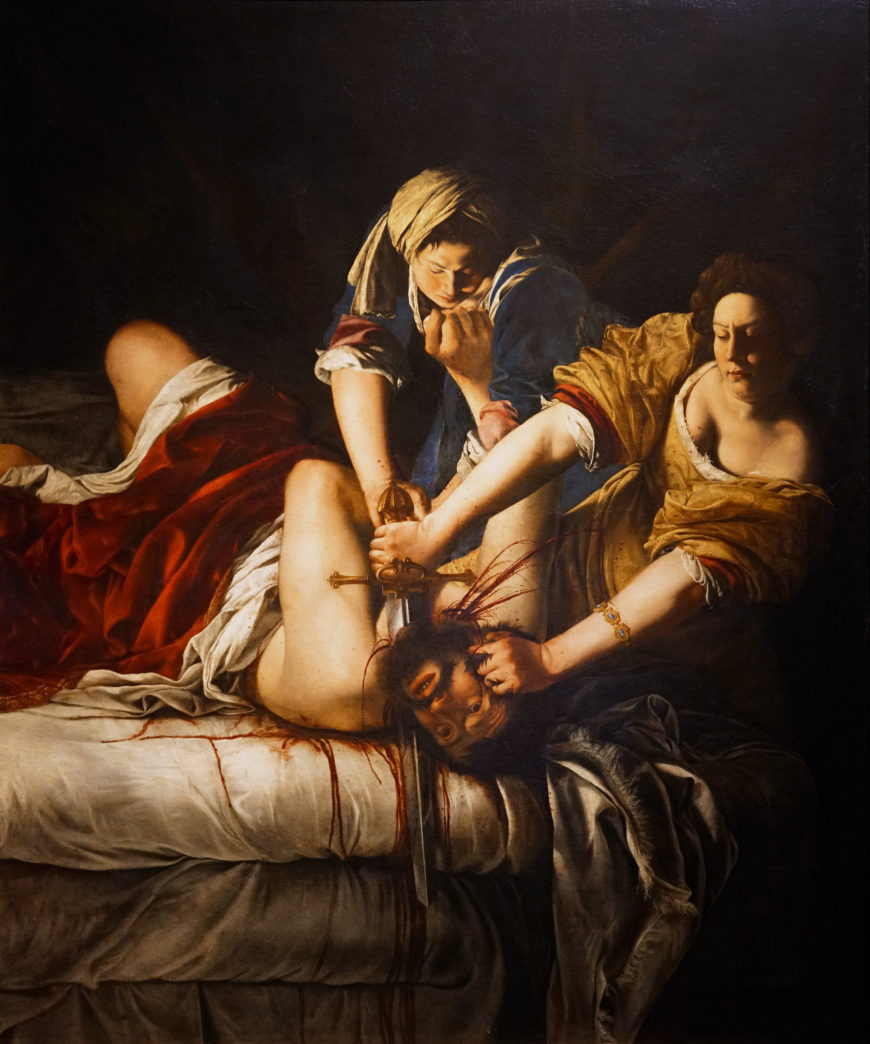
It seems fitting that it should be her, a poor black woman, forgotten in a country so filled with atrocities that her own atrocities didn’t seem to matter. It seems right that auntie Marta will be the one to kill God, not Nietzsche. I think that as I stare at her tired, still face laying in her coffin. And she won’t use words or concepts to do it – nothing that can be simply disagreed with. She will use the knife I am putting up her left sleeve, or the machete I lay under her right arm. Or, perhaps, she’ll use the hand gun I am putting under her skirt now while she rests still in her final bed – just like she planned.
I kiss her cold hands and ask her to bless me, this small, thin, stronger-than-strong woman. The black on her skin might look dull from the lack of blood-flow. Her lips may seem like dry earth from the lack of moisture. But I know that somewhere up there in the sky right now, Auntie Marta is screaming at God and brandishing her weapons in his face. His white, wrinkled, misogynous, child-murdering face who refused to listen to her prayers – and mine and everyone else’s.
I smile for the first time in weeks. God is going to pay for what he did. God is about to be sacrificed. And when Auntie Marta takes Her throne, she will return Erin to me. And no mother will ever lose her child. Then, both the righteous and the damned will shine like the sun in the kingdom of their Mother.
M. M. Coelho is a Brazilian-Irish writer based in Dublin. She has written two short plays, Indonesia and Fatherhood, as well as a short film, Shells, all produced in Dublin. Her short stories Aberration, Clare’s Freedom, and The Voice have been published online. She is currently pursuing a Master’s degree in Creative Writing at DCU.
 BarBar
Leave a Reply