

In the middle of the night, she spoke softly and slowly to him. On the quiet street where their small house had just begun to shape into a home, she laid in the dark next to him on their old spring mattress and played with his hair. Most days she wept silently to herself, both with sadness and joy, hope and fear, while the bed they shared grew colder each night.
“Why won’t you answer me? Please? Just once,” she pleaded with him, “people say that I should give up on you — that it’s not worth wasting my child-bearing years on someone who just can’t be there for me, someone who won’t — can’t provide the things I need.” She waited quietly, hoping desperately for a response.
“Maybe they’re right.”
The eastern sun beckoned for her to rise each morning but she stayed in bed with the curtains drawn — allowing the light to only whisper through narrow slits of parted fabric. Next to him. She couldn’t keep her eyes off the rise and fall of his chest. She couldn’t look away — not for one moment, fearing she might miss him wake and call her name sweetly in the rocky and warm voice she had fallen in love with in the early mornings when everything was new. When everything was how it should be. But no. Still there was nothing.
On Fridays the landlord would come with a rap, rap, rap on the door. He waited in the shimmering sunlight of mid-morning, on the porch of the home that was just a house, an income, a check to him. And a check that was not coming — not nearly often enough. Thus, his reason for being there, every Friday, at 10am on the dot, to collect what was owed.
He knocked again but heard nothing. Not a sound save for a quiet beep, beep, beep which came at a hauntingly perfect cadence.
“This is the final week before I have to call the police. If you don’t have the last 6 months for me, which I image you don’t, I would start packing. I don’t want to have to do this, Carla. I really don’t.” He waited a long while at the doorstep for a response but there was none. So he turned and walked away.
The weekend went by like most did, with the still house watching the bushes grow — its somber face peeling and cracking in the rising and falling strength of the sun.
On Monday, Carla’s friend came to the door — a pretty woman with blonde hair, a beautiful and full life both within and ahead of her. She announced herself at the door with a rap, rap, rap.
“Carla, sweetheart, I know you’re in there,” she said almost to herself. She wondered why she even came by, just to stand on the doorstep in silence. Not a sound was heard but the soft beep, beep, beep from inside the house to keep track of the seconds gone by. She loved Carla and wanted her to know that she was there for her, even through everything that was happening. All the misery and misfortune. “Just know that I’m thinking about you, babe,” she said, mustering up as much cheer as she possibly could and then turned and left.
A few days later her parents stopped by. “Honey, we know you’re in there. Please, just answer the door,” said her father, a stern man whose heart had been beaten down by the world long ago. Her mother spoke next — softer, “Honey, please. I wish you’d at least answer our calls. You have a life to live, sweetheart.”
Carla heard the voices at the door. She recognized them, but only as one would a face just below the rippling surface of the water. She remained quiet in her bed. Silently staring at her husband whose chest continued to rise and fall with the rhythmic pulses of the artificial lung machine that kept him breathing. Not a sound arose from his body but the continuous and peaceful, beep, beep, beep which said her name in the same way her husband once did. She could almost hear it — Carla, Carla, Sweetheart.
“Well, if you won’t answer, we will come back on Friday when the police show up,” and with that, they turned and walked away. Her father held her mother tightly as they walked back to the car, tears in her eyes.
On Friday, the landlord came again, this time with two police officers in tow. Their blue uniforms smartly pressed and their badges glistening in the soft sunlight of mid-morning. “Alright, Carla, I warned you. You have to come out now or these fine officers will have to come in.” They waited in the silence for a few moments. Then, finally, the unmistakable click of the lock and the turn of the handle. The door slowly pried open.
Carla stood in the doorway, in a soft purple robe and slip-on shoes. Her expression was blank as she drifted past the trio and down the walkway. “It’s all yours,” she said plainly, walking through the procession of her mother and father and friend waiting on the sidewalk for her before turning down the quiet street.
The landlord and the officers watched her go then turned back to the matter at hand. They went from room to room, checking to see if there were any paint splattered walls or turned over dressers — any damage out of spite — but the house was immaculate.
It was deadly quiet. Not a sound.
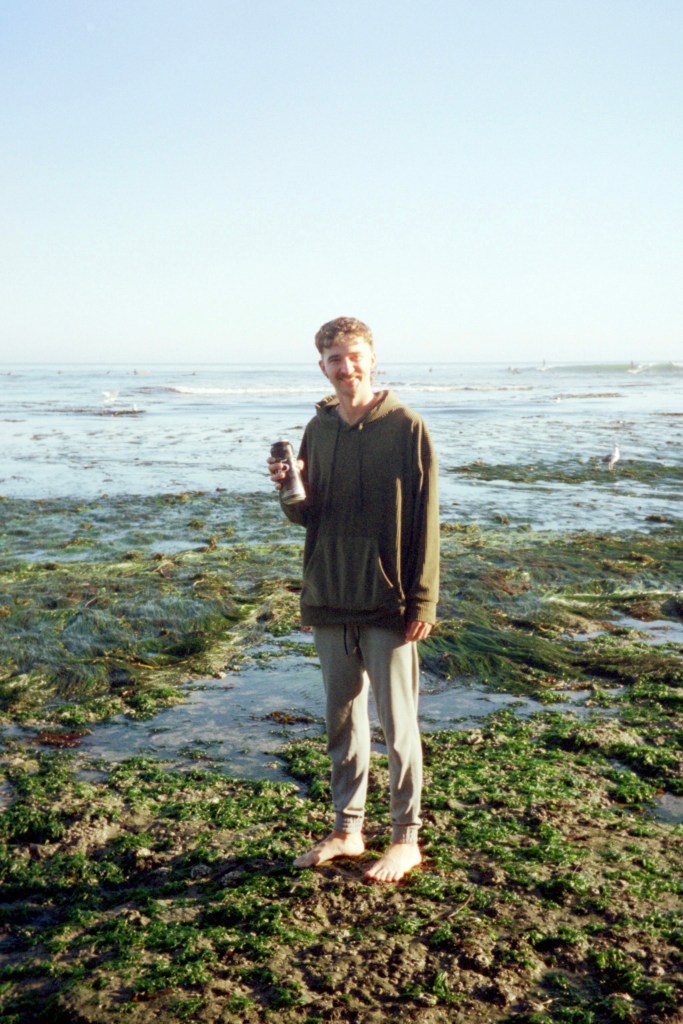
Sam Spring is best known for his songwriting work in the musical duo “Tennis Club” with their song, “Morning” eclipsing 6,000,000 plays on Spotify alone. The 28-year-old will have poetry and short fiction appearing in Passengers Journal, The Wisconsin Review, BarBar, and Denver Quarterly among others this year.
 BarBar
Leave a Reply